
Roof Leak Repair in San Diego: Common Causes, Warning Signs & Solutions
San Diego doesn’t get much rain, which is exactly why leaks catch homeowners off guard. A roof can sit through months of dry weather with a hidden weakness, then show it during the first real storm of the season. By the time water drips from the ceiling, it has usually been working its way through the roof for a while.
- November 11, 2026
- California
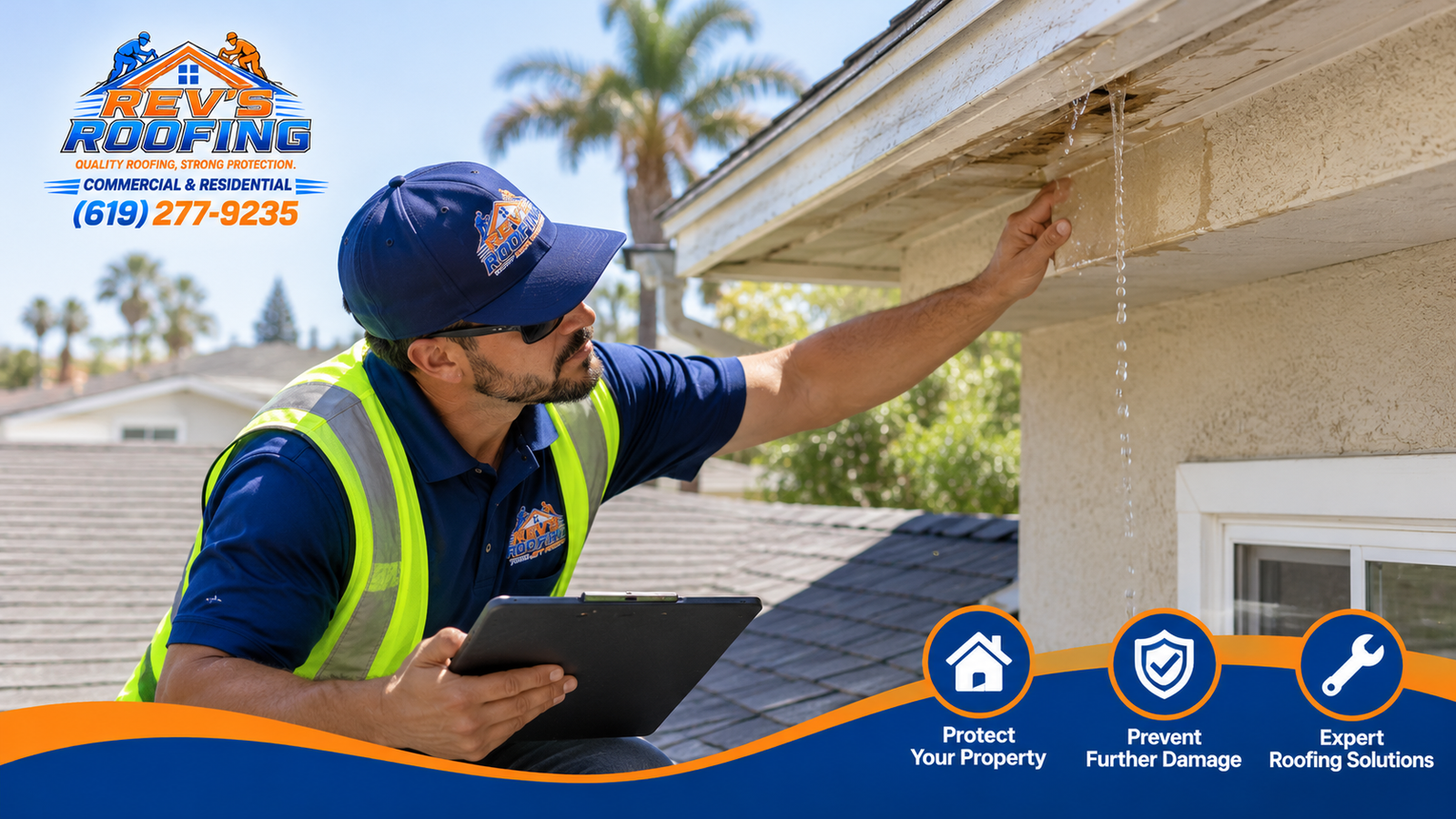
This guide covers the common causes of roof leaks, the warning signs to look for, what to do right away and how professional roof leak repair works, so you can fix the real problem instead of the symptom.
Warning Signs You May Have a Roof Leak
Leaks don’t always announce themselves with drips. Watch for:
- Brown, yellow or ring-shaped stains on ceilings or walls
- Peeling or bubbling paint, especially near the top of walls
- Damp, compressed or discolored insulation in the attic
- A musty smell or visible mold
- Daylight showing through roof boards in the attic
- Missing, cracked or curling shingles, or granules collecting in gutters
- Rust on flashing, vents or nails
A stain that appears and then dries up still means water got in. It will likely return with the next rain.
The Common Causes of Roof Leaks
1. Damaged or missing shingles
Wind, age and sun exposure can crack, curl or lift shingles, exposing the underlayment and deck. This is one of the most common causes, and it’s often a simple repair when caught early.
2. Failing flashing
Flashing seals the joints around chimneys, skylights, vents, walls and valleys. Metal can rust, sealant can crack and nails can back out. Flashing problems are among the most frequent leak sources because every roof has many of these transitions.
3. Worn pipe boots and vent seals
The rubber collars around plumbing vents break down in the sun over the years. A cracked boot can let water run down the pipe and into your ceiling.
4. Clogged gutters and blocked valleys
When debris prevents water from draining, it can back up under shingles or overflow along the fascia. Cleaning gutters and clearing valleys is simple maintenance that prevents bigger problems.
5. Exposed or loose fasteners
Nails that have backed out, or exposed fasteners on a metal or low-slope roof, create small openings. Temperature changes cause roofing materials to expand and contract, which gradually works fasteners loose.
6. Cracked tiles or failed underlayment
On tile roofs, the tiles shed most of the water, but the underlayment below does the waterproofing. Cracked tiles or aging underlayment can leak even when the roof looks fine from the street.
7. Flat roof problems
Flat and low-slope roofs can leak through seam failures, punctures, damaged flashing or areas where water pools. If your property has a flat section, our flat and commercial roofing team can inspect it.
8. Age and wear
Even well-installed roofs wear out. Years of UV exposure, heat and coastal moisture make roofing materials brittle. When leaks are showing up in several places, the roof may be reaching the end of its life.
For a wider look at what goes wrong on California roofs, see our guide to the top 7 roofing problems California homeowners should never ignore.
What to Do Right Now If Your Roof Is Leaking

- Protect your belongings. Move furniture and place a bucket under the drip. If the ceiling is bulging with water, puncture it carefully in the lowest spot to release the water into a bucket.
- Document everything. Take photos and video of the damage with dates. This helps if you file an insurance claim.
- Don’t climb on a wet roof. It’s dangerous and you could cause more damage.
- Call a licensed roofer promptly. A professional can find the source and, if needed, install a temporary cover until a permanent repair is possible.
- Contact your insurer if the damage was sudden. Storm damage may be covered, while gradual wear usually isn’t. Check your policy.
How Professional Roof Leak Repair Works
Inspection. The roofer traces the leak from the inside (attic and ceiling) and the outside (roof surface, flashing, penetrations). The stain’s location rarely matches the entry point.
Diagnosis. The cause determines the fix. A cracked pipe boot needs a different repair than failed flashing or a worn-out section of roof.
Repair. Typical solutions include replacing damaged shingles or tiles, installing new flashing or pipe boots, resealing penetrations, repairing seams on flat roofs and replacing damaged decking.
Verification. After the repair, the roofer should confirm the area is sealed and explain whether other weak points need attention.
Be wary of a fix that is only a layer of roofing cement over a problem area. It may stop the drip for a while, but it doesn’t address why the leak started. Our roof repair service starts with finding the real source before recommending anything.
When Repair Isn’t Enough
Repairs make sense when damage is localized and the rest of the roof is sound. If leaks keep returning in different spots, the roof is near the end of its expected lifespan or the decking is soft or sagging, replacement may be the better investment. An inspection is the only reliable way to tell.
Preventing Leaks in San Diego
- Have the roof inspected once a year and after major wind or rain events
- Keep gutters, valleys and roof surfaces clear of debris
- Repair loose shingles, flashing and seals early
- Trim branches that rub against or hang over the roof
- Keep attic ventilation working to limit moisture
Need Leak Repair? Talk to Rev’s Roofing
If you’ve spotted a stain or a drip, don’t wait for the next storm. Rev’s Roofing is a licensed California roofing company in San Diego (CSLB License #1159152). We’ll find the source, explain your options and give you a clear estimate.
Frequently Asked Questions
What are the most common causes of roof leaks?
Damaged or missing shingles, failing flashing, worn pipe boots, clogged gutters, loose fasteners, cracked tiles and aging roofing materials are the most common causes.
Can a roof leak be fixed without replacing the whole roof?
Often, yes. If the leak comes from a localized problem and the rest of the roof is in good shape, a targeted repair can solve it. Widespread damage or an aging roof may call for replacement.
How long can a roof leak go untreated?
Not long. Even a small leak can saturate insulation, rot decking and encourage mold, and the damage tends to grow with each rain. Get it inspected promptly.
Why does my roof leak only when it rains hard?
Small openings may only let water through when it’s driven by wind or heavy rain, or when water pools. That doesn’t mean the problem is minor; it means the opening exists.
How much does roof leak repair cost in San Diego?
It depends on the cause and how much of the roof is affected. A small flashing or pipe boot repair costs far less than repairing damaged decking or a section of tile roof. Rev’s Roofing provides a free estimate so you know what’s involved before you decide.
Does homeowners insurance cover roof leaks?
Sometimes. Sudden damage from a covered event such as a storm may be covered, while leaks caused by age or lack of maintenance usually are not. Read your policy and contact your insurer.
Should I patch a leak myself?
A temporary tarp or sealant can limit damage in an emergency, but climbing on a roof is risky and a DIY patch can hide the real source. Call a licensed roofer for the permanent fix.