Roof Repair vs. Roof Replacement: What’s the Best Choice for Your Home?
When a roof starts showing problems, almost every homeowner faces the same question: patch it or replace it? Repairs cost less up front, but replacing a roof that’s past its prime can save money and headaches over time. Replacing a roof that still has years left is an expense you didn’t need.
- November 3, 2026
- California
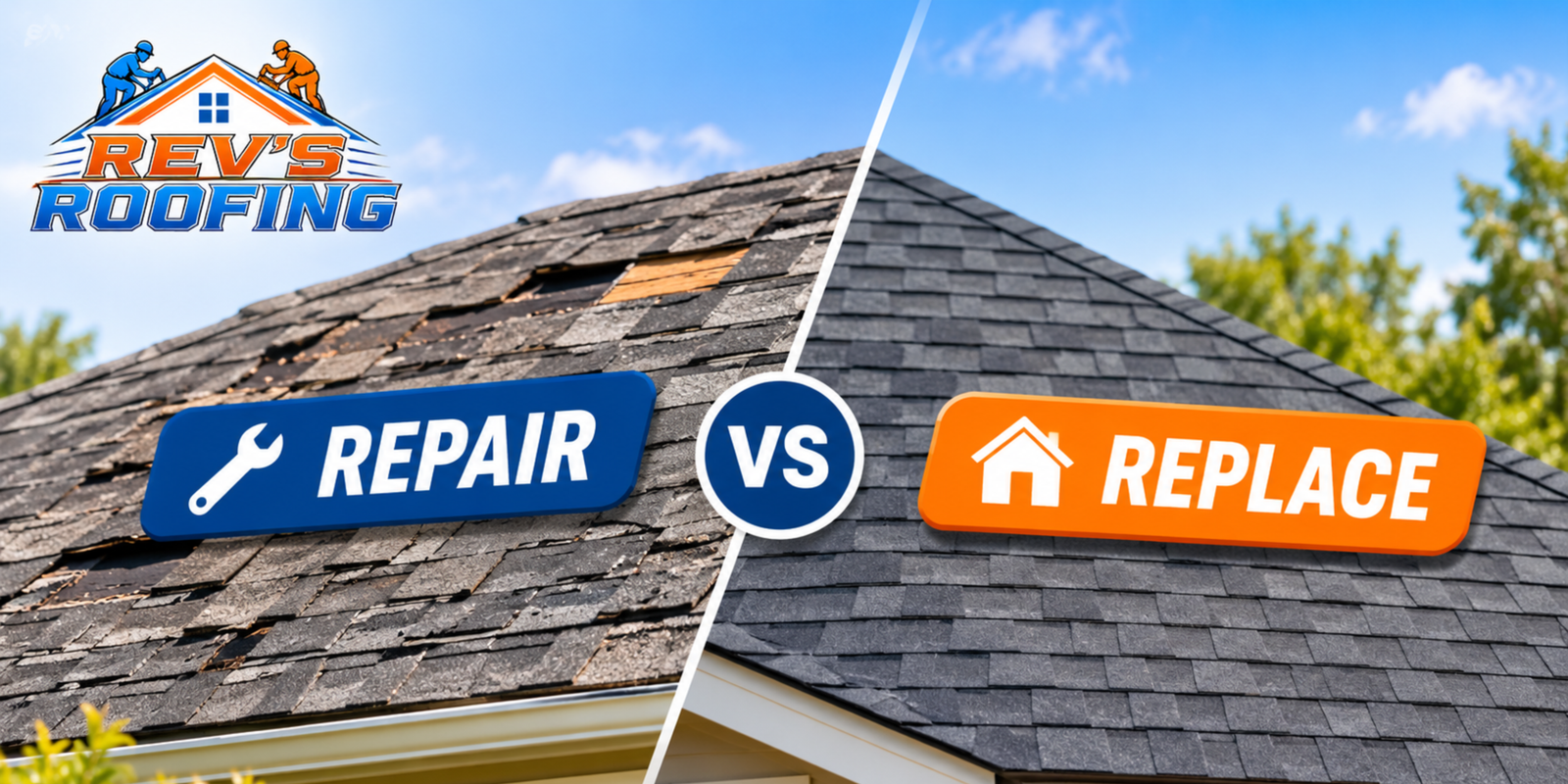
This guide walks you through how to decide between roof repair vs roof replacement, what to look for, and what questions to ask so you can make a confident choice.
The Short Answer
- Repair usually makes sense when the damage is localized, the roof is still in generally good condition, and the underlying structure is sound.
- Replacement usually makes sense when wear is widespread, leaks keep coming back, the roof is near the end of its lifespan, or the underlying deck is damaged.
The right answer for your home depends on your specific roof, and a professional inspection is the only way to know for sure.
When Roof Repair Makes Sense
Repair is often the right call when:
- Damage is limited to one area. A single leak, a few missing or cracked shingles after a windstorm, or one failed flashing section can usually be fixed without touching the rest of the roof.
- The roof is relatively young. If your roof is well within its expected lifespan and was properly installed, targeted repairs can extend its life.
- The deck and underlayment are intact. If the structure underneath is dry and solid, a repair addresses the problem at its source.
- The problem has a clear cause. Fallen branches, a worn pipe boot, or a cracked vent flashing are classic examples of repair-friendly issues.
A good repair starts with finding the real source of the problem, not just covering the symptom. Our Roof Repair and Maintenance team looks at where the water is entering and explains whether a targeted fix will do the job.
When Roof Replacement Is the Better Choice
Consider replacement when:
- The roof is at or near the end of its lifespan. Asphalt shingle roofs commonly last somewhere between 15 and 30 years depending on the shingle type and conditions. Older roofs with many small problems often cost more to keep patching than to replace.
- Damage is widespread. Curling, cracking, or missing shingles across multiple slopes suggest the material has aged out.
- Leaks keep returning. If you’ve repaired the same roof several times and new leaks keep appearing, the roof as a system is likely failing.
- There’s deck or structural damage. Soft spots, sagging, or rot mean moisture has been getting in for a while.
- Heavy granule loss. Large amounts of granules in the gutters or bald patches on shingles signal that protection is wearing away.
- Storm or fire-related damage is extensive. Major wind, hail, or impact damage may require replacing larger sections or the whole roof.
If you’re leaning toward replacement, you can learn more about the process on our residential roof replacement page.
Repair vs. Replacement at a Glance
|
Factor |
Repair Is Usually Better |
Replacement Is Usually Better |
|
Extent of damage |
One small area |
Multiple areas or slopes |
|
Roof age |
Well within expected lifespan |
At or near end of lifespan |
|
Leak history |
First or isolated leak |
Recurring leaks |
|
Roof deck |
Dry and solid |
Soft, sagging, or rotted |
|
Upfront cost |
Lower |
Higher |
|
Long-term value |
Good if roof is healthy |
Better if roof is failing |
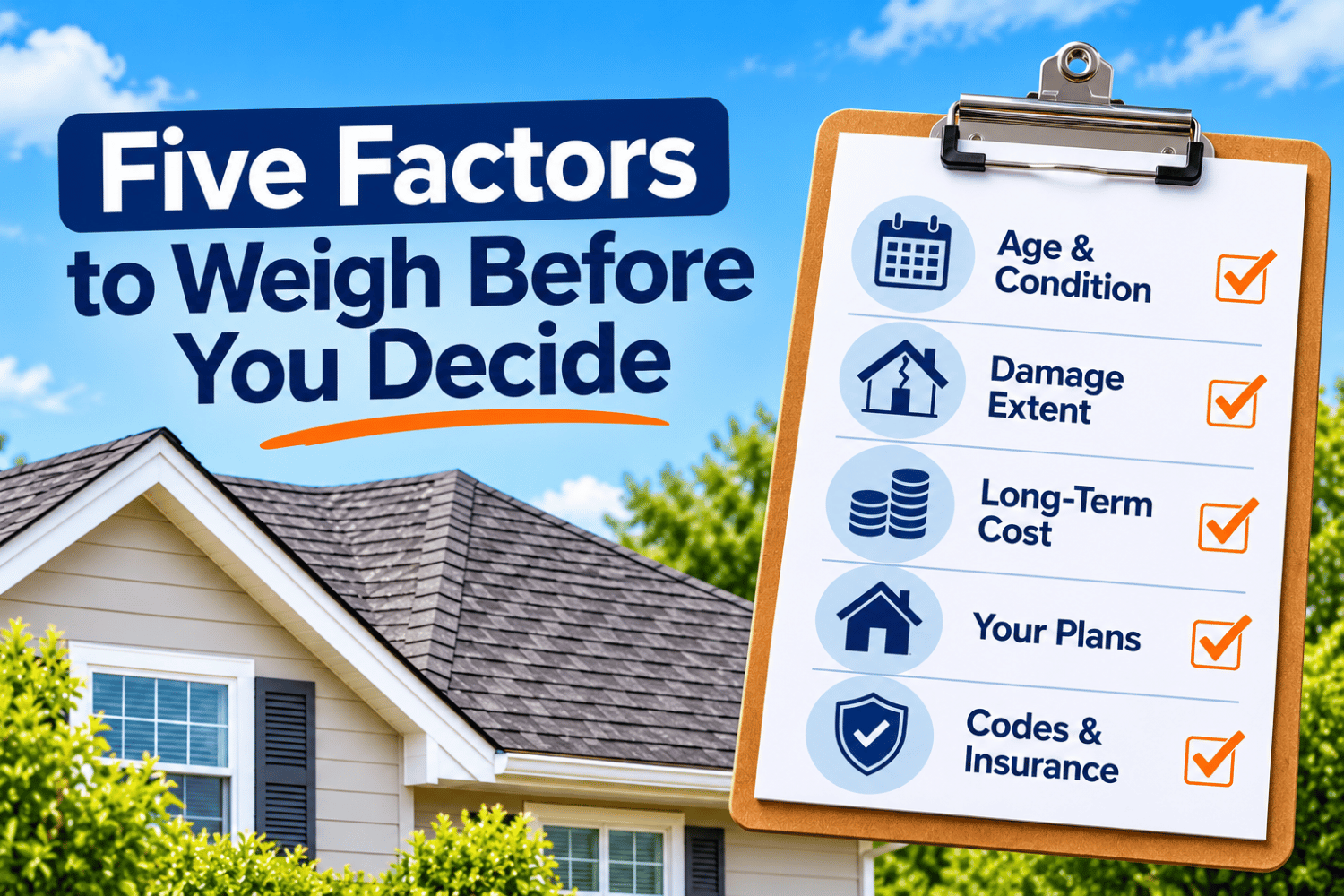
Five Factors to Weigh Before You Decide
1. Age and Condition
Age is a helpful clue, but condition matters more. A well-installed 12-year-old roof in good shape may need only minor repairs, while a poorly ventilated or poorly installed roof can fail sooner. Heavy sun exposure, coastal salt air, and temperature swings in California can speed up aging.
2. How Far the Damage Has Spread
A professional will check beyond the visible problem: underlayment, decking, flashing, ventilation, and the attic. Damage that looks small from the street is sometimes the tip of the iceberg.
3. Cost Over Time, Not Just Today
A repair is cheaper today, but if the roof will need more repairs within a year or two, the combined cost can approach that of a new roof. A common rule of thumb is that if repair costs begin to add up to a substantial share of replacement cost, it’s time to compare seriously. Ask for both options in writing so you can compare.
4. Your Plans for the Home
If you plan to sell soon, a roof in obvious disrepair can raise concerns during inspections and negotiations. If you plan to stay for many years, a replacement may offer peace of mind and a longer warranty.
5. Codes, Permits, and Insurance
Roof replacements typically require a building permit, and California’s energy and fire codes can affect material choices, especially in certain climate zones and in wildfire-prone areas. Requirements vary by city and county, so a licensed local contractor who understands them can save you trouble. If damage came from a storm, fire, or another covered event, review your homeowner’s policy and contact your insurer before beginning work.
Why Quick Fixes Can Backfire
Sealing a leak with roofing cement may stop the dripping for a season, but it doesn’t address why the leak started. Repeated patches on aging shingles can also leave you with a roof that looks fine but is quietly failing underneath. Before approving any repair, ask what caused the damage and how the fix addresses it.
Questions to Ask Any Roofer
- What’s causing the problem, and can you show me?
- Is repair realistic, or would it be a short-term fix?
- Can I get both repair and replacement estimates in writing?
- What materials do you recommend and why?
- Are you licensed in California and insured? (You can verify a license on the CSLB website.)
- What warranty applies to the materials and to the workmanship?
A contractor who gives honest repair-or-replace guidance, rather than defaulting to the bigger job, is one worth trusting.
What to Expect From a Replacement
A typical asphalt shingle replacement includes removing the old roofing, inspecting and repairing the deck as needed, installing underlayment and flashing, laying new shingles, and cleaning up the site. Timeline depends on roof size, complexity, materials, and weather. For local homes, see how we approach asphalt shingle roof installation in San Diego to help homeowners protect and improve their roofs.
Get a Straight Answer About Your Roof
The best way to decide between repair and replacement is to have someone look at your actual roof. Rev’s Roofing offers free estimates and will explain your options, from a targeted repair to a full replacement, so you can decide with clear information. We’re a licensed California contractor (CSLB License #1159152) serving San Diego’s North, South, East, and West communities.
Frequently Asked Questions
How do I know if my roof needs repair or replacement?
Repairs usually suit localized problems such as a single leak or a few damaged shingles. Widespread wear, recurring leaks, or an aging roof may point to replacement. An inspection of the roof surface, flashing, and attic will give you a reliable answer.
Is it worth repairing a roof that’s 20 years old?
Sometimes yes, if the damage is limited and the rest of the roof is sound, a repair may buy you time. But on an older roof with multiple issues, repeated repairs can add up, so compare repair costs with replacement.
Can I put new shingles over old ones?
In some situations local codes allow an overlay, but it’s often not ideal because it hides the condition of the deck and adds weight. A contractor should inspect the roof and explain whether tear-off is the better route.
How long does a roof replacement take?
Most residential projects take from a few days to about a week, depending on size, complexity, materials, and weather. Your contractor should give you an expected schedule with your estimate.
How much does a roof replacement cost in San Diego?
It depends on roof size and pitch, the materials you choose, the condition of what’s underneath, and how accessible the roof is. Because every roof differs, the most reliable way to get a number is a written estimate after an assessment.
Can a roof repair or replacement affect my homeowner’s insurance?
Yes it can. Some insurers consider roof age and condition when setting terms, and storm-related damage may be covered depending on your policy. Contact your insurance provider before work begins and keep records of inspections and repairs.
Does Rev’s Roofing offer free estimates?
Yes, you can request one through the contact form or by calling +1 (619) 277-9235.